
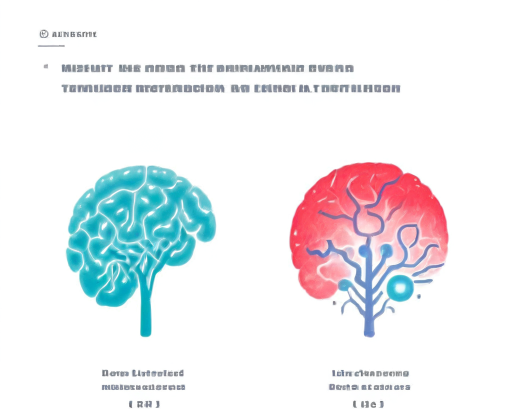
Artificial Intelligence (AI) is transforming industries and our daily lives at an unprecedented pace. Within this vast field, two terms dominate the conversation: Machine Learning (ML) and Deep Learning (DL). Often used interchangeably, they represent distinct concepts with unique capabilities and applications. As someone navigating the AI landscape, whether you’re a tech enthusiast, a business leader, or a developer, understanding the difference between deep learning and machine learning is crucial. This article will demystify these terms, explore their relationship, and highlight their strengths and ideal use cases.
Machine Learning: The Foundation of Intelligent Systems
Machine Learning is a branch of Artificial Intelligence focused on developing algorithms that enable computers to learn from and make decisions based on data. Instead of being explicitly programmed for every possible scenario, ML models identify patterns and relationships within data to improve their performance over time. It’s the engine that powers many of the predictive and analytical tools we use today.
How Machine Learning Works
At its core, ML involves feeding data into an algorithm. This algorithm processes the data, identifies underlying patterns, and builds a model. This model is then used to make predictions or decisions when presented with new, unseen data. The learning process can be supervised (using labeled data), unsupervised (finding patterns in unlabeled data), or reinforcement learning (learning through trial and error with rewards).
Common Machine Learning Algorithms and Applications
- Linear Regression: Predicting continuous values (e.g., house prices).
- Logistic Regression: Classification tasks (e.g., spam detection).
- Decision Trees & Random Forests: Classification and regression, often used for feature importance analysis.
- Support Vector Machines (SVM): Effective for classification, especially with clear margins of separation.
- K-Means Clustering: Unsupervised learning for grouping similar data points (e.g., customer segmentation).
ML excels in scenarios involving structured or tabular data (like spreadsheets or databases), where features are well-defined, and the relationships might be complex but not necessarily requiring the intricate pattern recognition of DL. Think credit scoring, sales forecasting, or recommendation systems based on user purchase history.
Deep Learning: The Powerhouse of Modern AI
Deep Learning is a specialized subset of Machine Learning inspired by the structure and function of the human brain. It utilizes artificial neural networks with multiple layers (hence “deep”) between the input and output layers. These layers allow the model to learn increasingly complex, hierarchical representations of the data.
The Role of Neural Networks
Deep Learning models are built using artificial neural networks. Each layer consists of interconnected nodes (neurons) that process information. Data flows through these layers:
- Input Layer: Receives the raw data (e.g., pixels of an image).
- Hidden Layers: Multiple layers where feature extraction and transformation occur. Each layer learns to identify more complex patterns based on the output from the previous layer.
- Output Layer: Produces the final result (e.g., classification label, predicted value).
This hierarchical learning enables DL models to automatically discover intricate patterns in raw, unstructured data like images, sound, text, and video.
Deep Learning Breakthroughs
DL has driven remarkable advancements in fields requiring high-level abstraction:
- Computer Vision: Image recognition, object detection (self-driving cars), facial recognition, medical image analysis.
- Natural Language Processing (NLP): Machine translation, sentiment analysis, chatbots, text summarization, voice assistants.
- Speech Recognition: Transcribing speech to text with high accuracy.
- Generative AI: Creating new content like images, music, and text (e.g., DALL-E, GPT models).
Key Differences: Choosing the Right Tool
While Deep Learning falls under the Machine Learning umbrella, several critical distinctions influence when to use one over the other:
Data Requirements
Machine Learning: Can often deliver good results with smaller datasets, especially if the data is well-structured and features are carefully engineered (selected and preprocessed by humans).
Deep Learning: Typically requires massive amounts of data to train effectively. Its strength lies in learning features directly from raw data, but this demands significant volumes. Performance generally improves with more data.
Feature Engineering
Machine Learning: Relies heavily on domain expertise for feature engineering. Data scientists spend considerable time selecting, creating, and transforming features to improve model performance.
Deep Learning: Automates the feature engineering process. The neural network layers learn relevant features and hierarchies directly from the raw input data, reducing the need for manual feature crafting.
Computational Power
Machine Learning: Many algorithms can be trained on standard CPUs, although some benefit from GPUs.
Deep Learning: Demands substantial computational resources, particularly Graphics Processing Units (GPUs) or specialized hardware like TPUs (Tensor Processing Units). Training complex models can be time-consuming and expensive.
Interpretability (The “Black Box” Problem)
Machine Learning: Models like decision trees or linear regression are often more interpretable. It’s easier to understand why the model made a specific prediction.
Deep Learning: Neural networks are notoriously complex and opaque. Understanding *why* a deep learning model arrived at a particular output can be extremely difficult, making them less suitable for applications requiring high transparency.
Conclusion: Complementary Forces in AI
Machine Learning and Deep Learning are not rivals but rather complementary technologies within the AI ecosystem. Machine Learning provides a robust toolkit for a wide range of problems, particularly those involving structured data and where interpretability or limited data is a concern. Deep Learning, with its ability to handle unstructured data and automate feature learning, pushes the boundaries in complex perception and generation tasks, driving the cutting edge of AI.
The choice between them isn’t about which is “better,” but which is more appropriate for the specific problem at hand. Consider the nature of your data, the problem complexity, available computational resources, and the need for model interpretability. As both fields continue to evolve rapidly, understanding their differences empowers you to leverage the right AI tool for your needs and stay ahead in this transformative era.